
Cryotherapy vs ice bath: what's the difference?
Compare session style, comfort, access, and what each option is commonly used for.
Overview
Cryotherapy and ice baths are both cold-exposure services, but the customer experience is very different. Whole-body cryotherapy usually means a short session in a cold chamber or cryocabin. An ice bath or cold plunge means immersion in cold water, often as part of a sauna or contrast-therapy routine.
For recovery shoppers, the right comparison is not just "which is colder". It is access, comfort, session control, supervision, price, hygiene, contraindication screening and how the cold exposure fits around training. Evidence around cold-water immersion is stronger for short-term muscle soreness than for broad longevity claims, and the best dosage is still not settled.
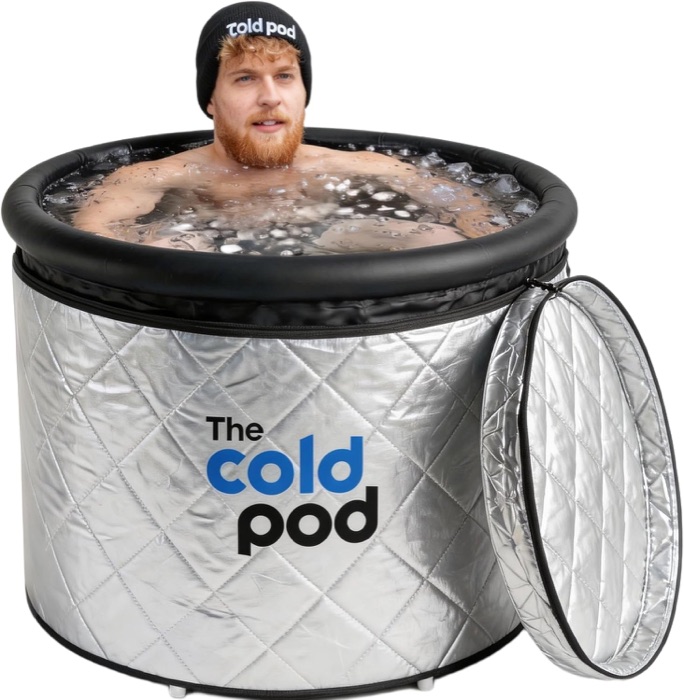 ★ Our pick
The Cold Pod Insulated Ice Bath Tub 320L
Why we love it: Insulated so it holds its temperature longer — the 1100-review track record backs the claim.
Why we picked it: Insulated so it holds its temperature longer — the 1100-review track record backs the claim.
How they compare
| Factor | Cryotherapy chamber | Ice bath / cold plunge |
|---|---|---|
| Session feel | Very cold air for a short period, often 2-3 minutes. | Cold water immersion, often more intense because water conducts heat quickly. |
| Typical use | Recovery studios, wellness clinics, sports recovery venues. | Gyms, spas, sauna studios, recovery spaces and home setups. |
| Key checks | Blood pressure, heart/circulation conditions, pregnancy and cold sensitivity. | Cold shock response, safe entry/exit, supervision, hygiene and medical suitability. |
| Price shape | Often priced per short session or as a membership bundle. | Often sold as part of sauna/contrast sessions or wellness passes. |
What the evidence suggests
Cochrane's review of cold-water immersion found some evidence of reduced delayed-onset muscle soreness after exercise compared with passive rest, but the trials were small and the best protocol and safety profile were unclear. That is useful for honest customer copy: "may help some people feel less sore" is safer than "speeds recovery" or "improves performance".
Medical cryotherapy is also a term used for clinical freezing of tissue, which is different from wellness cryotherapy chambers. Directory pages should make that distinction clear where needed.
Questions to ask
- How long is the session and what temperature is used?
- Is there a suitability screen before first use?
- Is the session supervised?
- How is the water or chamber cleaned between users?
- Should I avoid this if I have heart, blood pressure, circulation or pregnancy-related concerns?
FAQ
Which is better for runners?
It depends on the runner, the training block and the goal. Cold-water immersion may reduce perceived soreness for some people, but sleep, nutrition, sensible loading and injury management usually matter more.
Should cold exposure hurt?
No. It can feel uncomfortable, but customers should stop and seek support if they feel dizzy, faint, numb, confused or unwell.
Some links on this page may be affiliate links. If you click and buy, we may earn a commission at no extra cost to you. Learn more