
Air purifiers at home
What to look for in an air purifier — filter type, room size, noise and running costs — for better bedroom air.
Overview
An air purifier draws room air through filters to reduce dust, pollen, pet dander, smoke and other particles. For a recovery or sleep routine, the main benefits people notice are cleaner-feeling bedroom air and fewer allergy symptoms. This guide treats air purifiers as a wellness/comfort purchase and avoids medical claims.
 ★ Our pick
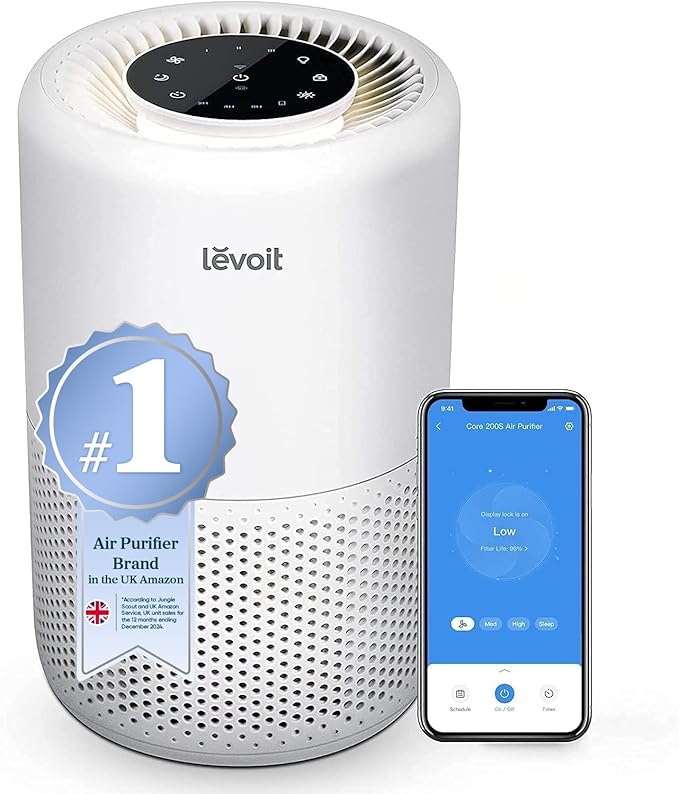
Levoit Smart HEPA Air Purifier for Bedroom Home, 64m² Coverage, Core 200S
Why we love it: WiFi and app control plus a 3-stage HEPA filter — set it on a schedule and forget it, 64m² coverage.
Why we picked it: WiFi and app control plus a 3-stage HEPA filter — set it on a schedule and forget it, 64m² coverage.
What to look for
- Filter type: HEPA H13/H14 captures fine particles; carbon layers help with odours.
- Room size: match the stated coverage (m² or m³/h CADR) to your bedroom size.
- Noise: a quiet night mode matters if it runs while you sleep.
- Running costs: check filter replacement price and frequency — some brands add a 'never replace' filter.
- Smart features: app control and auto mode are convenient, not essential.
How to use one well
Place it where air actually circulates, keep doors closed for the room you want to clean, and replace filters on the manufacturer's schedule. A purifier works alongside ventilation and cleaning, not instead of them.
FAQ
Will an air purifier fix allergies?
It can reduce airborne allergens in one room, which many people find helps. It does not replace medical advice or treating the underlying cause.
Should it run at night?
Many people run one on a quiet setting while sleeping. Check the noise rating and night mode before buying.
Some links on this page may be affiliate links. If you click and buy, we may earn a commission at no extra cost to you. Learn more